

How long after a kitchen remodel do you expect your floor to remain picture-perfect? If you’re constantly cooking or have a busy family, you’ve already resigned yourself to enjoying it while it lasts.
Today, we’re exploring the best kitchen flooring for high-traffic homes. Keep reading for durability, low maintenance, and safety under tiny feet and paws alike.
Best kitchen flooring for high-traffic homes: The criteria
Call up a contractor and simply ask for “the best,” and you could end up with a pricey, slippery, fussy floor that memorizes every spill. Here’s what designers mean when they talk about the best floors for heavily trafficked areas.
Scratch and stain resistance.
Flooring materials that stand up to dents, scratches, and stains will have one of the following qualities. One, the material will be so dense and hard that it just won’t damage easily. Otherwise, it will feature a layer or coating that protects the surface.
Moisture resistance and spill protection.
Nonporous tiles and 100% waterproof vinyl won’t warp or rot when exposed to moisture. There’s another factor at play here, however. Professional installation ensures that seams, adhesives, or grouting are addressed properly so that nothing seeps through.
Traction and safety (even under wet feet).
An appropriate COF (coefficient of friction) rating of 0.42 or higher is a must. The surface texture of the material should exceed the minimum guidelines for safety. The more activity a kitchen sees, the greater the odds that someone will suffer the most common household injury among kids.
The most durable kitchen flooring options for daily wear
The three options that meet all of the criteria for durable kitchen flooring are porcelain tile, LVP, and engineered hardwood.
Porcelain tile
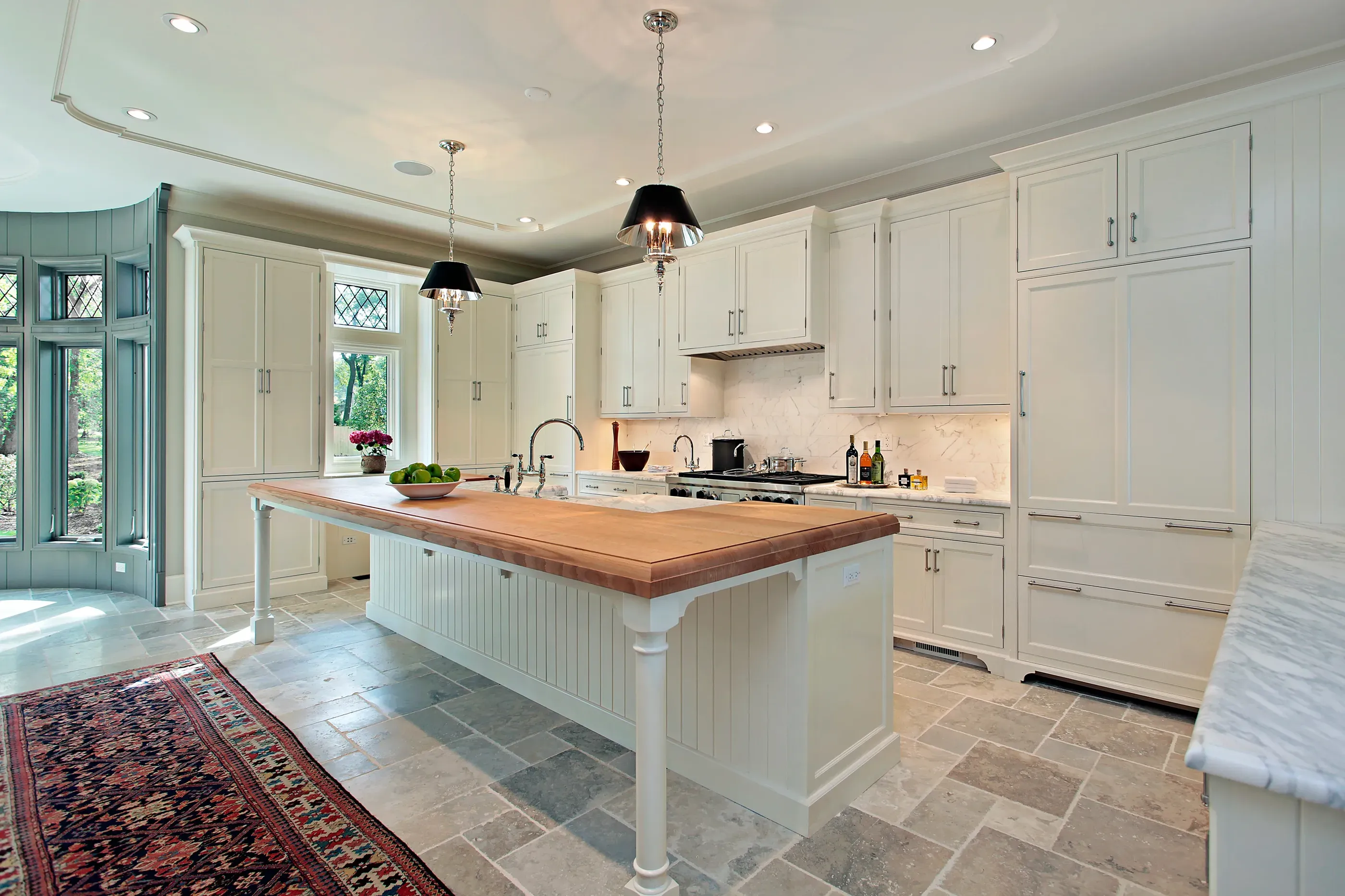
Porcelain tile is more durable than other tile options like ceramic and many natural stones. Avoid choosing a glossy finish, and you have the ultimate in durable, beautiful kitchen flooring. It can cost more and require more expert installation than the other options here. However, it pays for itself in pure longevity, lasting 50 years or more.

Luxury vinyl plank (LVP)
If you want something no-nonsense, attractive, and perfectly within budget, LVP is your go-to. In addition to the price, homeowners choose LVP because the core makes it more comfortable to walk on than many tiles. It’s extremely low maintenance, and with so many styles to choose from, you can refresh and update every 10-15 years, no problem.
Engineered hardwood
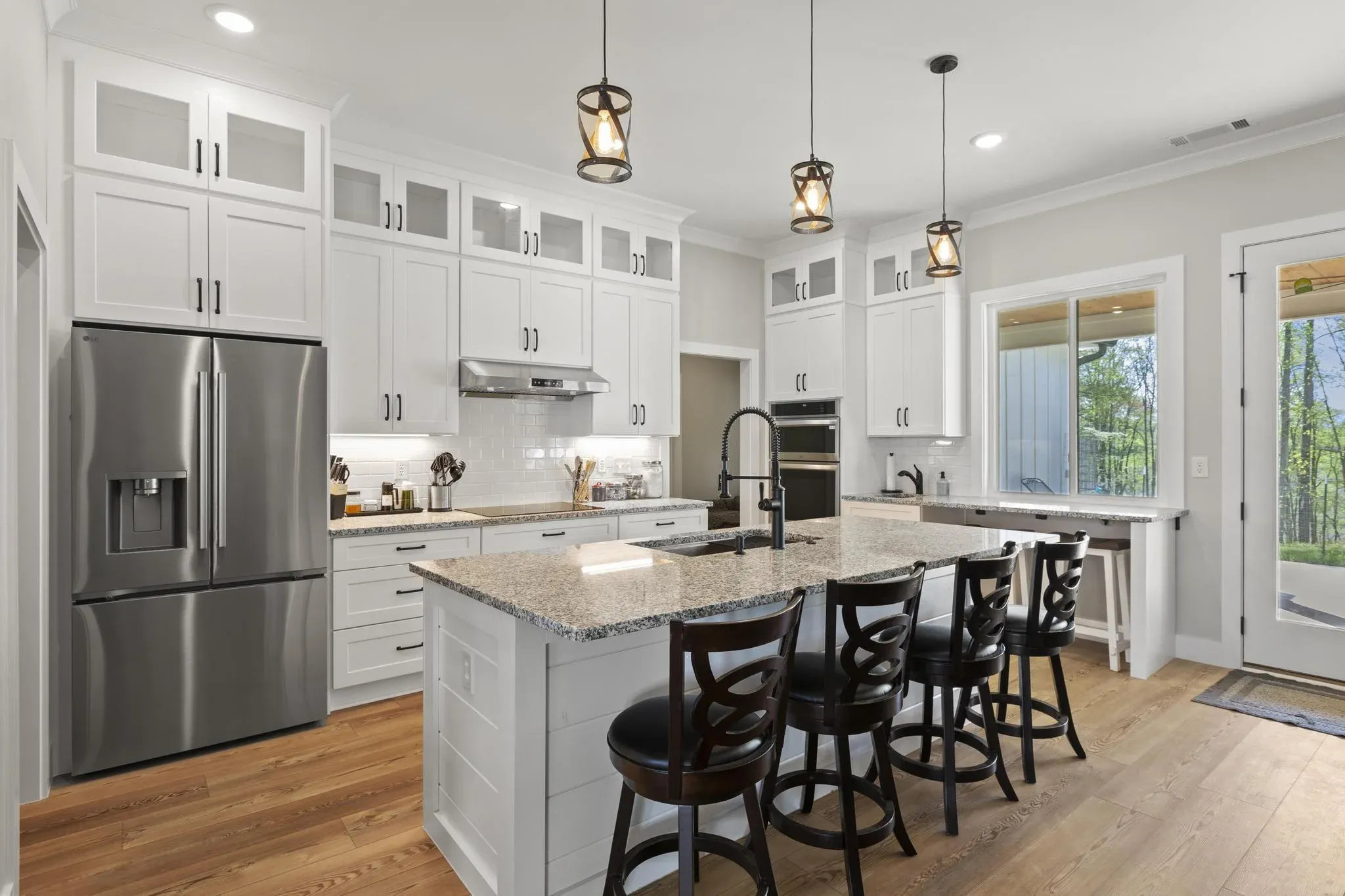
If you love natural materials but are worried about damage, engineered hardwood may be right for you. It is slightly higher maintenance than LVP or tile, but more durable and pet-friendly than solid hardwood.
What to consider when choosing kitchen flooring for busy households with kids and pets
There’s a lot of variety available among our three best flooring options. As you consider each, look for specific types that have some of these qualities. They’re suited to the type of 24-hour traffic that pets and kids can cause.
-
Designs that hide damage, just in case. Vinyl or engineered wood flooring that’s too light, dark, or uniform in pattern shows regular wear and tear sooner.
-
Non-slip surfaces that can be wiped clean. A bit of texture adds more slip resistance than something perfectly polished. It should also hold up to the average all-purpose cleanser.
-
Comfort. Cool and hard, or temperate and quiet? Porcelain tile is tougher, but LVP can have noise-dampening benefits.
-
Budget and desired longevity. Quality tile can be a 50-year floor with a larger initial investment. LVP is the most affordable and may last half that. Engineered hardwood falls somewhere between and can be fully refinished once or twice.
Come see your samples at a Designery showroom.
There are options within options for your kitchen flooring. The best way to know for sure is to discuss your flooring needs with a pro designer. Come to your local Designery and see firsthand how far flooring has come since you last remodeled your kitchen.
“Their showroom is beautiful, their communication is excellent, and they make what can feel like an overwhelming remodel process feel exciting and manageable.”
Randi, The Designery client
Find your showroom or book a free consultation with us.
FAQ: Best kitchen flooring for high-traffic homes
What is the best kitchen flooring for homes with dogs?
Porcelain tile and LVP are your best pick for pets. Both resist or hide scratches well. Choose porcelain tile for a kitchen floor that still looks upscale 30-50 years from now. Choose LVP if you want something more comfortable underfoot or will refresh or update in the next 15 years.
Which durable kitchen flooring option needs the least maintenance?
Luxury vinyl plank wins in the maintenance area since you only need to sweep and wipe it clean. Porcelain tile can be as low-maintenance, but it must be expertly installed. Replacing a damaged tile is more costly than a plank, too.
Genuine stone and engineered hardwood are both durable but can come with special maintenance or treatment instructions.
Can I use LVT in my kitchen instead of LVP?
Yes, and in fact, we would suggest it if you want the benefits of luxury vinyl but with the look of stone tile. Luxury vinyl tile (LVT) is very similar to plank in durability, affordability, and ease of installation. The shape and design layer are the main differences.

